Home Lab SOC
As I work towards my Security Science Degree, I wanted immediate hands on exprience of cybersecurity. For that, I built a virtual Security Operations Center (SOC) to learn how defenders find and stop hackers. This project helped me move past just reading about attacks. Instead, I built a real system that can collect and show security data as it happens. For this project, I set up several virtual computers on my own machine. I used a Kali Linux computer as the “Attacker” and a Windows 7 computer as the “Victim.” Every move the attacker made such as running a malicious file, was sent to a central system called a SIEM. This system lets me see exactly how an attack looks to a junior defender.

Barebones Lab due to limited hardware
SOC-Machine: Ubuntu LTS Server
Vulnerable Machine: Windows 7 (Stuxbot Vulnerable)
Home Page
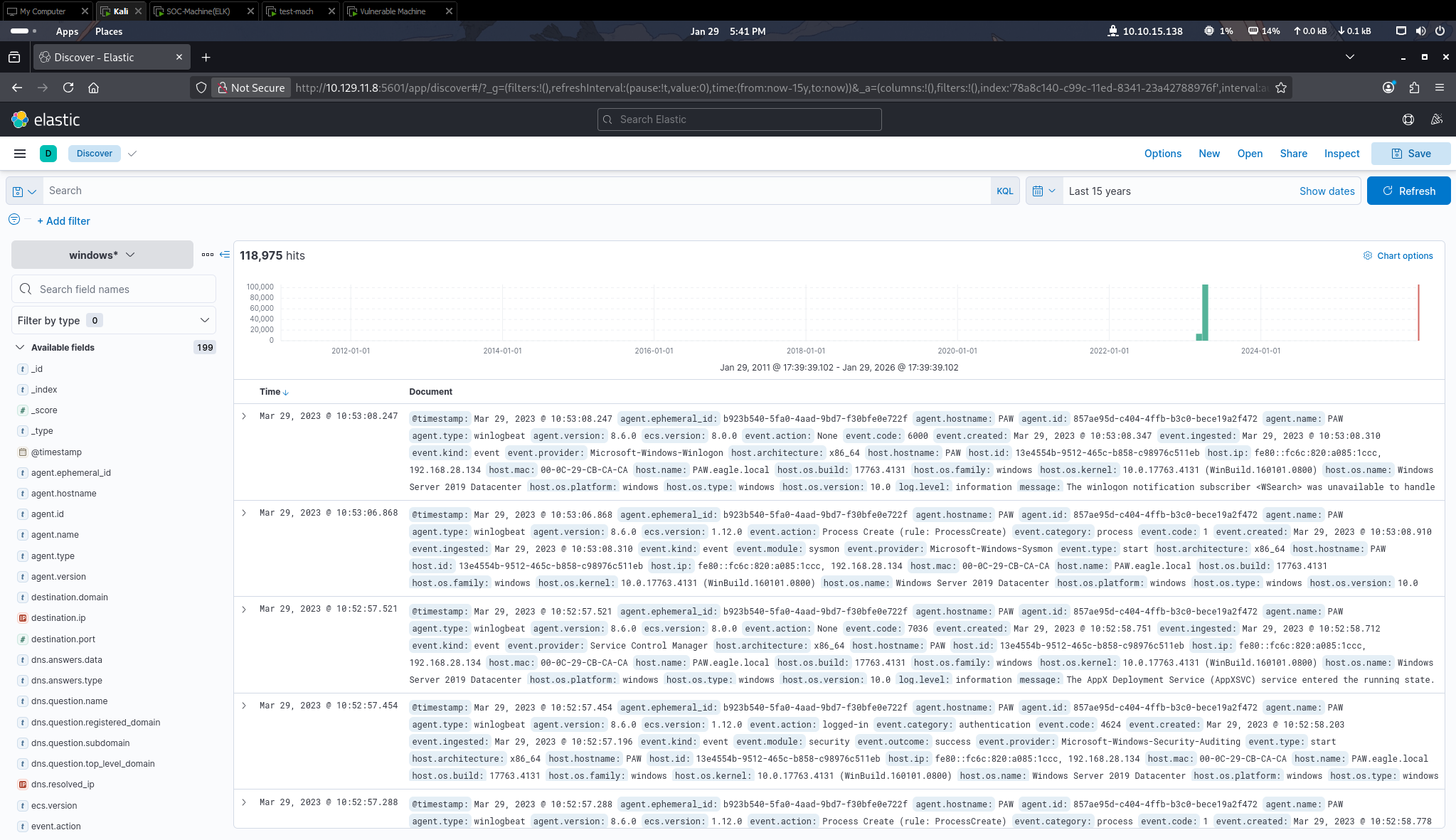
Lateral Transfer Tool Detection
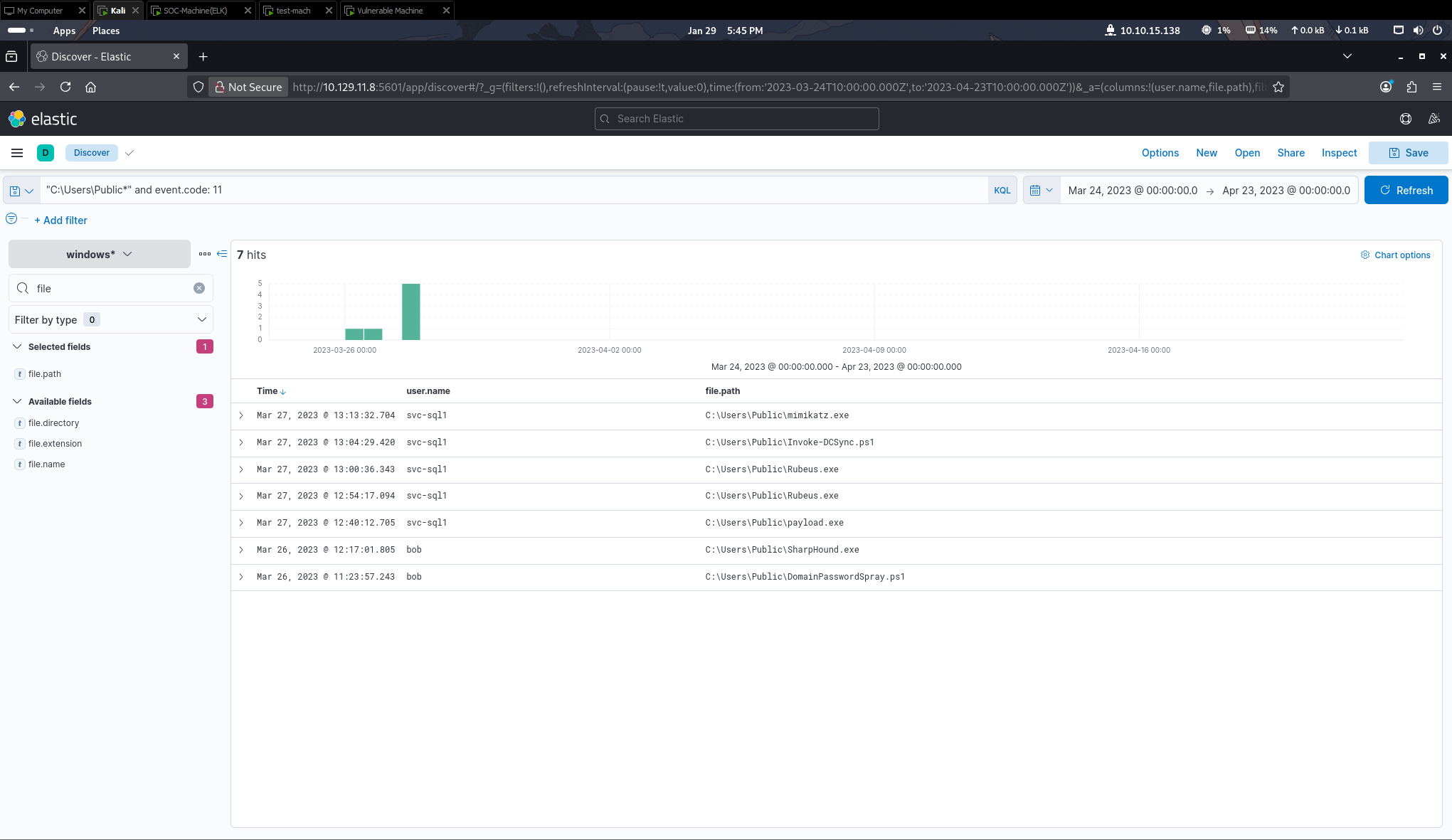
This query monitors Sysmon Event ID 11 to detect file creation events within the C:\Users\Public directory, a very common “staged” location to use. We find an application called Rubeus known for lateral movement and privelage escalation.
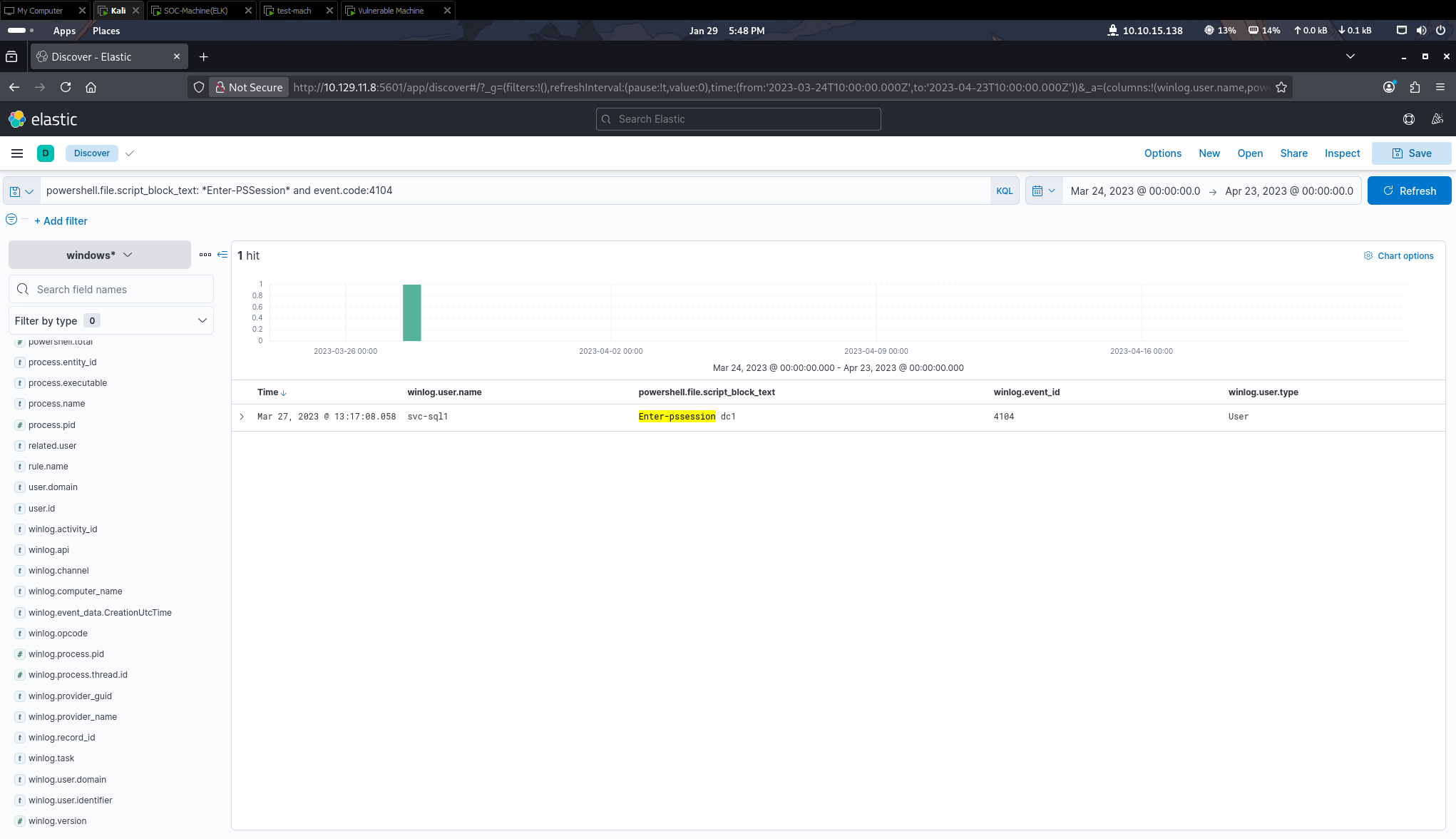
This query monitors PowerShell Event ID 4104 (Remote Command Execution) to detect the use of the Enter-PSSession command, which indicates an adversary is attempting Lateral Movement to remotely control another machine on the network.
Next Steps
As the images show, my current setup is designed to detect old common vulnerabilities. I plan to continuously improve this lab so it can identify modern threats and more complex attack patterns. My goal is to move beyond simple “signature-based” detection, where the system looks for a specific file name and move toward “behavior-based” detection, where the system looks for suspicious actions. To achieve this, I will try and experiment with Sigma rules, which are a universal language used by security teams to share descriptions of how attacks look in logs and research more on “Living off the Land” techniques.